
Work Context
The book "Hidden Figures," written by journalist and researcher Margot Lee Shetterly and published in 2016, sheds light on the lives and careers of African-American mathematicians who worked at NASA from the 1940s to 1960s. Inspired by her own family history—her father being one of NASA's first Black engineers—Shetterly offers a deeply documented narrative on the challenges of racial segregation and sexism these women faced, including in America's top scientific institutions at the time.
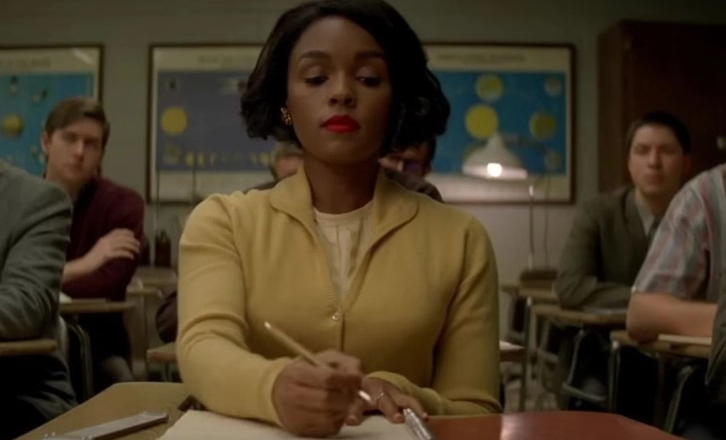
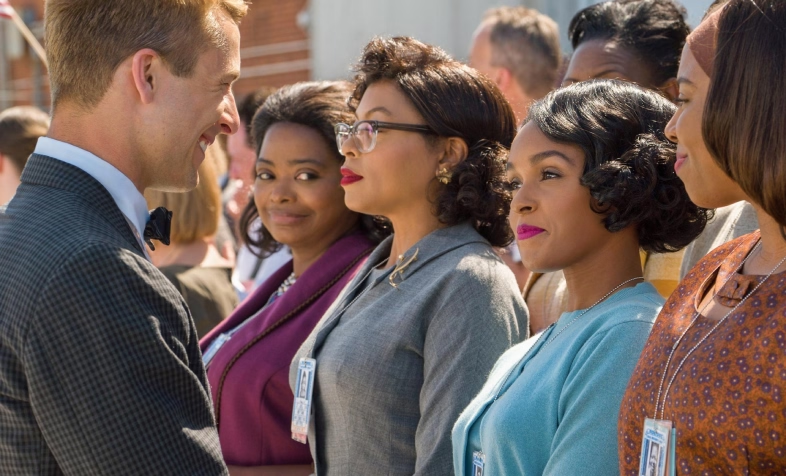
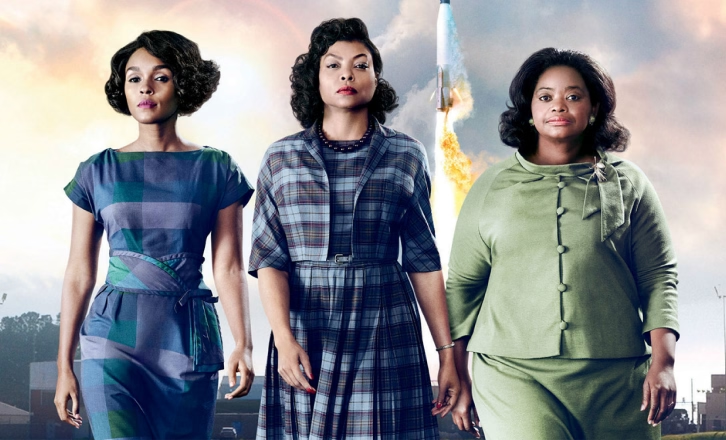
The book quickly caught the attention of Hollywood and was adapted into a 2016 film directed by Theodore Melfi. Like the book, the film follows the journeys of Katherine Johnson, Dorothy Vaughan, and Mary Jackson, showing how they propelled the United States to the forefront of space conquest despite insertion into a society marked by Jim Crow laws and deep discriminations. This dual literary and cinematic project anchors these women's destinies in American history, revealing the hidden side of a national myth and initiating a movement to rehabilitate these "computers of color," long invisible.
Story Plot
"Hidden Figures" narrates the true story of three exceptional African-American women (Katherine Johnson, Dorothy Vaughan, and Mary Jackson) who, in a context of racial segregation and sexism, made crucial contributions to American space programs. The narrative follows their lives at NASA, between mathematical calculations, computer management, and the fight for professional recognition. Their personal journeys intertwine with institutional challenges, highlighting their determination against discrimination.
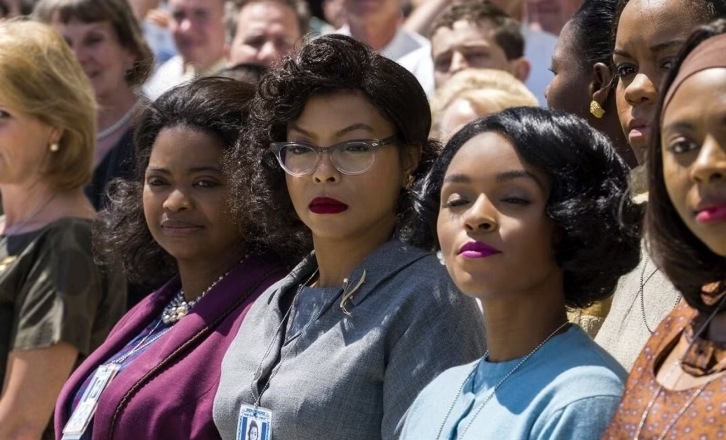
The book and film detail their contributions to historic missions, notably calculating the trajectories for John Glenn's 1962 orbital flight, a landmark scientific achievement. Their victories are also human, illustrating strong sisterhood and fierce fight for social justice, all in a tense political climate between the Cold War and the civil rights* struggle. This work makes visible these "computers of color," long in the shadows, and celebrates their scientific and social legacy.
Impact and Matilda Effect
"Hidden Figures" has profoundly impacted society by revealing the story of Black women whose role in space conquest had long been occulted. This narrative has given voice to those invisibilized in science, strengthening recognition of women's and minorities' contributions in fields traditionally dominated by white men. The success of the film and book has also encouraged societal reflection on equality, diversity, and inclusion*.
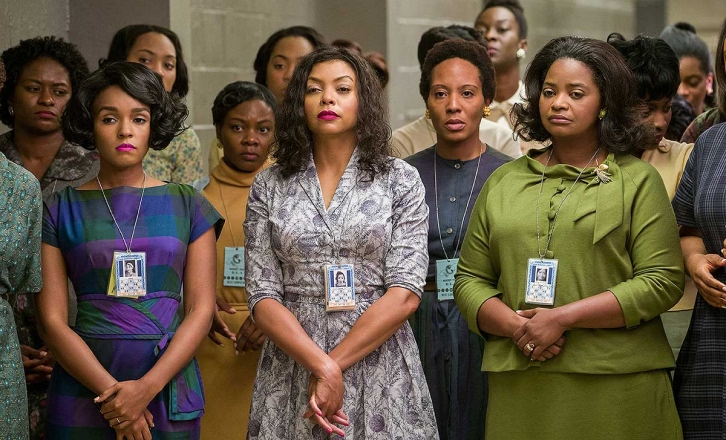
This rehabilitation* work directly counters the Matilda effect by finally making visible the major contributions of Katherine Johnson, Dorothy Vaughan, and Mary Jackson. "Hidden Figures" thus helps repair memory injustice* and transform scientific culture, encouraging diversity and recognition of those long ignored.