
Her Childhood
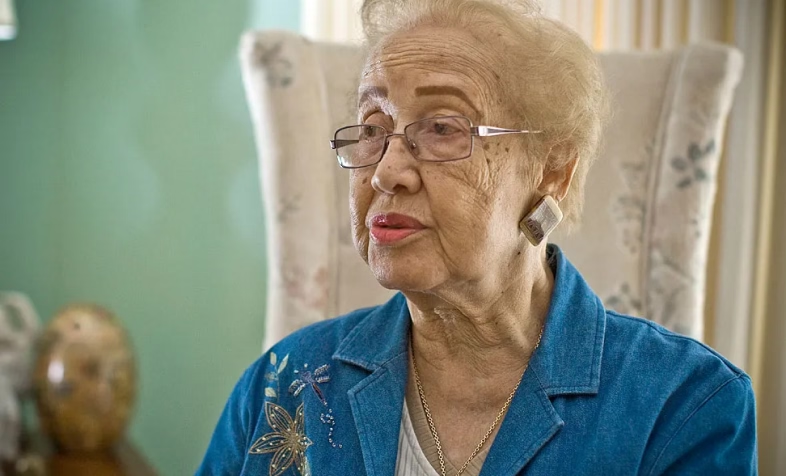
Katherine Johnson was born in 1918 in White Sulphur Springs, West Virginia, into an African-American family of four children. Her father was a lumberjack and farmer, her mother a teacher. From childhood, Katherine was passionate about math and amazed with her precocious talent: she counted everything around her and solved calculations well before other children her age. Enthusiastic about school, she benefited from her parents' support who invested in education despite the obstacles of racial segregation*.
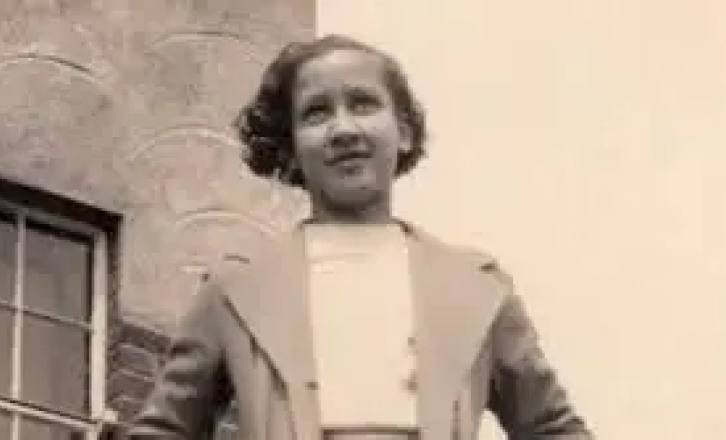
In her county, public education stopped early for Black children. But Katherine was sent to the Institute community high school, then entered West Virginia State College campus at just ten years old. She excelled in her studies, encouraged by mentors who offered her advanced courses created specially for her, and obtained her mathematics degree with highest honors at eighteen, laying the foundations for her exceptional future scientific career.
Her Career
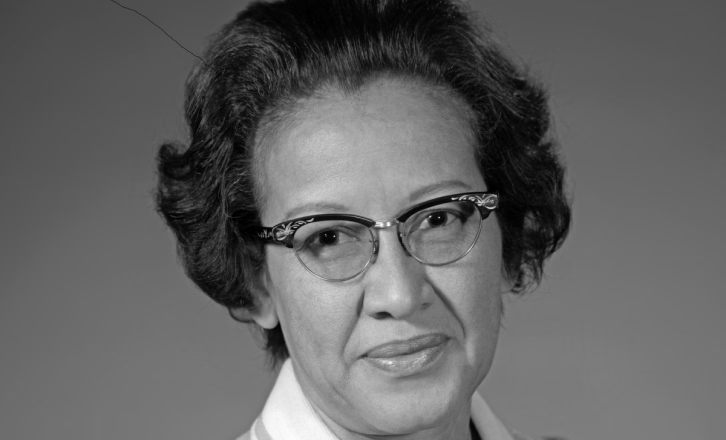
After brilliant studies, Katherine Johnson began her career as a teacher before joining NACA (NASA's predecessor) in 1953 as a "human computer." Quickly recognized for her rigor and talent, she participated in major missions, collaborating on navigation and trajectory development for America's first manned flights, while overcoming racial and sexist barriers of the era.
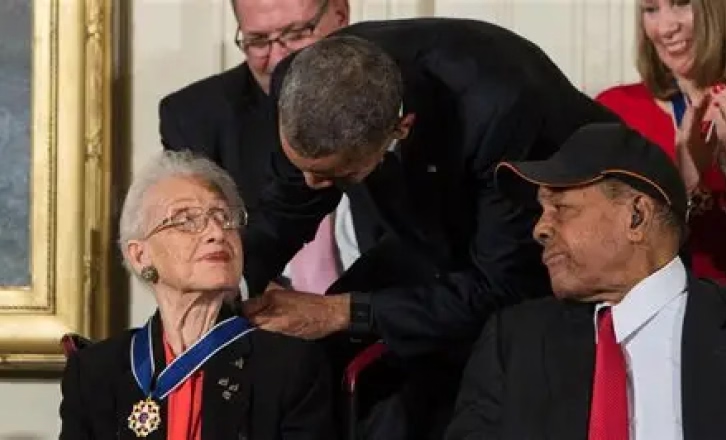
Despite her essential role, her name was recognized only after decades, notably thanks to the book and film "Hidden Figures" which revealed the story of Black women at NASA. Her journey shows how gender and race barriers long erased major achievements, making her late recognition both moving and fundamental for equality in STEM.