
Work Accomplished
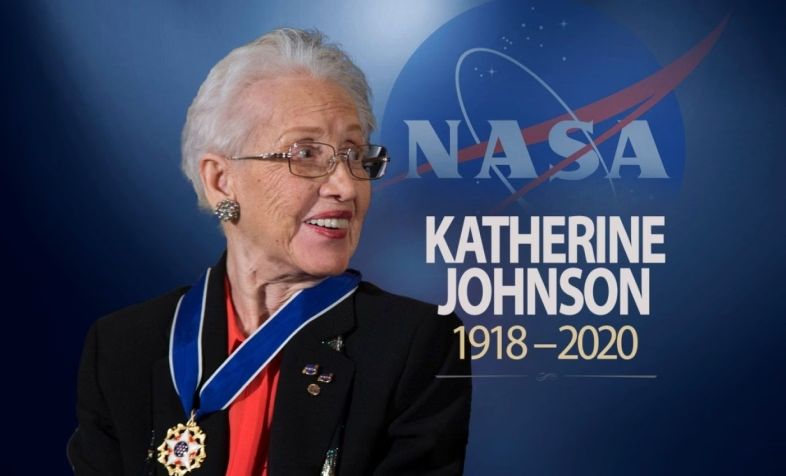
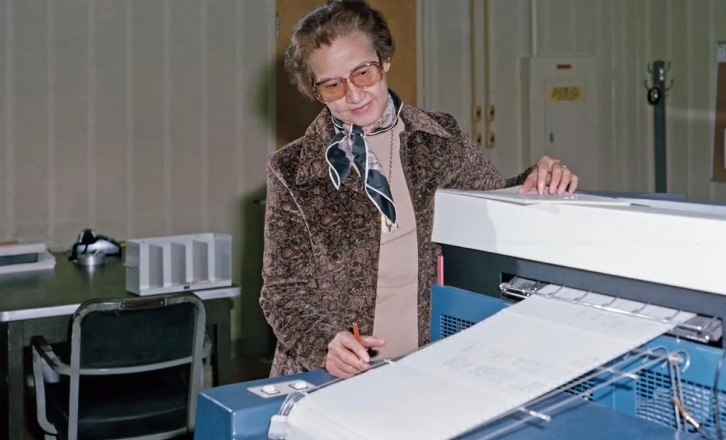
Katherine Johnson performed essential mathematical calculations for navigation and safety of American space flights. In 1960, she co-authored a report describing orbital trajectories*, a first for a woman at NASA. Her work included precise determination of launch windows, capsule trajectories in orbit, and emergency plans in case of unforeseen events.
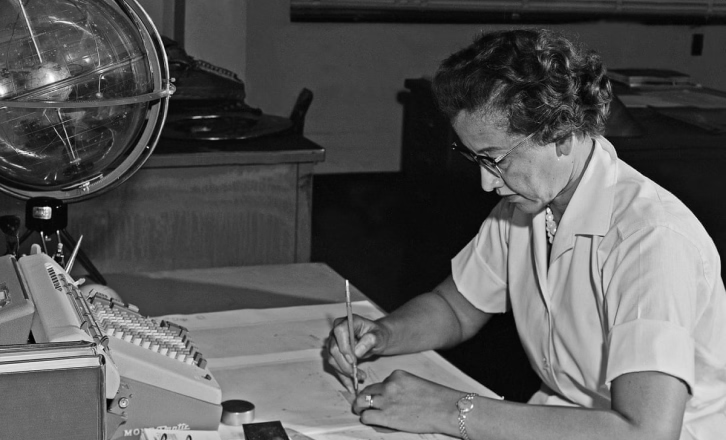
She also manually verified calculations produced by early computers, notably for the historic Mercury-Atlas 6 mission with astronaut John Glenn. Her expertise in applied mathematics enabled complex space rendezvous like Apollo 11's between the lunar module and command module, ensuring safe and precise maneuvers.
Impact & Legacy
Katherine Johnson's impact goes far beyond her calculations. By ensuring precision and safety of space missions, she played a decisive role in America's victory in the space race*. More than a mathematician, she became a symbol of perseverance against racial and sexist barriers, inspiring future generations to embrace STEM careers.
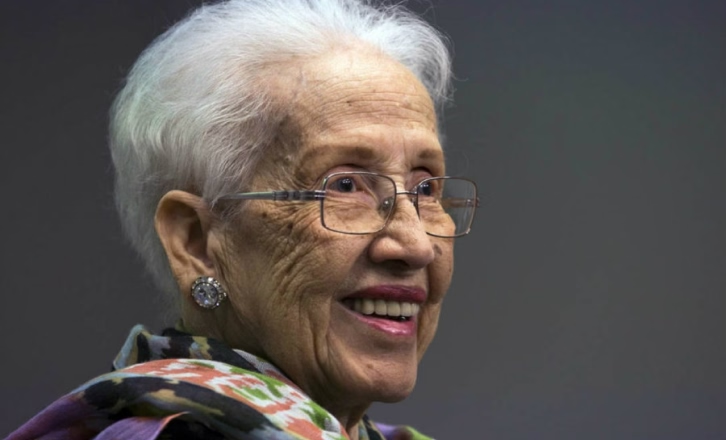
Her legacy continues through institutional and popular recognition, with honors such as the Presidential Medal of Freedom and NASA buildings named after her. The book and film "Hidden Figures" popularized her story, making her a universal model of success and equality. Her work continues to influence contemporary aerospace science, reminding that scientific progress is as human as it is technical.